

100% Free Courses and Certificates Web-Development-Applications Dumps PDF Demo Cert Guide Cover
PDF Exam Material 2025 Realistic Web-Development-Applications Dumps Questions
NEW QUESTION # 33
Which attribute is related to moving the mouse pointer of an element?
- A. onmouseenter
- B. Onmouseout
- C. Onmouseup
- D. Onmouseover
Answer: D
Explanation:
The onmouseover attribute in HTML and JavaScript is used to execute a script when the mouse pointer is moved over an element.
* onmouseover Attribute: This event occurs when the mouse pointer is moved onto an element. It is commonly used to change styles or content of the element when the user interacts with it by hovering.
* Usage Example:
<p onmouseover="this.style.color='red'">Hover over this text to change its color to red.</p> In this example, the text color changes to red when the mouse pointer is moved over the paragraph.
References:
* MDN Web Docs on onmouseover
* W3C HTML Specification on Events
NEW QUESTION # 34
A javaScript programmer defines the following function:
What is the name of the function?
- A. Number
- B. Function
- C. square
- D. Return
Answer: C
Explanation:
In JavaScript, the name of a function is defined after the function keyword and before the parentheses that enclose its parameters.
* Function Name: The function name is the identifier used to call the function. It is defined immediately after the function keyword.
* Usage Example:
function square(number) {
return number * number;
}
In this example, the name of the function is square.
References:
* MDN Web Docs on Functions
* ECMAScript Language Specification
NEW QUESTION # 35
Which element relies on the type attribute to specify acceptable values during form entry?
- A. <Select>
- B. <Option>
- C. <Button>
- D. <input>
Answer: D
Explanation:
The <input> element relies on the type attribute to specify acceptable values during form entry. Different input types include text, email, number, password, etc.
* Input Types: The type attribute determines the kind of input control and the acceptable values for that control.
* Usage Example:
<input type="email" placeholder="Enter your email">
<input type="number" min="1" max="10">
These input elements specify acceptable values for email and number inputs respectively.
References:
* MDN Web Docs on <input>
* W3C HTML Specification on Input Types
NEW QUESTION # 36
Which layout method causes images to render to small or too large in browser windows of different sizes?
- A. Relative width
- B. Liquid
- C. Fluid
- D. Fixed width
Answer: D
Explanation:
A fixed-width layout method specifies exact pixel values for widths. This approach does not adapt to different screen sizes, leading to images rendering too small or too large on various devices.
* Fixed Width Layout:
* Definition: Uses specific pixel values for the width of elements.
* Example:
container {
width: 800px;
}
* Issues:
* Lack of Flexibility: Does not scale with the size of the viewport, causing images and other elements to appear incorrectly sized on different screen sizes.
* Comparison:
* Fluid/Liquid: Adapts to the screen size using percentages or other relative units.
* Relative Width: Also adapts using units like em or %.
* References:
* MDN Web Docs - Fixed vs. Fluid Layout
* W3C CSS Flexible Box Layout Module Level 1
Using fixed-width layouts can result in poor user experience across different devices, highlighting the importance of responsive design principles.
Top of Form
Bottom of Form
NEW QUESTION # 37
Given the following code:
What is occurring?
- A. An event handler is tracking keyboard strokes.
- B. JavaScript is using the DOM to make a style change.
- C. In-line CSS is styling the <h1> tag.
Answer: B
Explanation:
The given code snippet demonstrates how JavaScript can manipulate the DOM to change the style of an element.
* Code Analysis:
* Given the HTML:
<h1 id="id1">Blog Title</h1>
<button type="button" onclick="document.getElementById('id1').style.color = 'red'">Click Here</button>
* When the button is clicked, the JavaScript code within the onclick attribute changes the color of the h1 element to red.
* Explanation:
* Option A: An event handler tracking keyboard strokes is incorrect because the event handler is tracking a mouse click, not keyboard strokes.
* Option B: JavaScript is using the DOM to make a style change is correct because the onclick attribute contains JavaScript code that modifies the style of the h1 element.
* Option C: In-line CSS is styling the <h1> tag is incorrect because the style change is done via JavaScript, not inline CSS.
* References:
* MDN Web Docs - Document.getElementById()
* W3Schools - JavaScript HTML DOM
NEW QUESTION # 38
Given the following CSS statement:
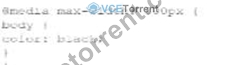
Which code segment changes the font color when the viewport is 800 pixels wide or wider?
- A.
- B.

- C.

- D.

Answer: C
Explanation:
To change the font color when the viewport is 800 pixels wide or wider, a media query with min-width:
800px is used. This ensures that the styles inside the media query are applied only when the viewport width is at least 800 pixels.
* CSS Media Queries:
* Syntax for Media Query:
@media screen and (min-width: 800px) {
body {
color: black;
}
}
* Explanation: The min-width: 800px condition ensures that the styles are applied when the viewport is 800 pixels or wider.
* Example Analysis:
* Option A:
@media screen and (min-width: 800px) {
body {
color: black;
}
}
* Correct. This applies the color: black; style to the body when the viewport is 800 pixels or wider.
* Option B:
@media min-width: 800px {
body {
color: black;
}
}
* Incorrect. Missing screen and which is required for a proper media query targeting screens.
* Option C:
@media screen and (max-width: 800px) {
body {
color: black;
}
}
* Incorrect. This applies the style when the viewport is 800 pixels or narrower.
* Option D:
@media max-width: 800px {
body {
color: black;
}
}
* Incorrect. This applies the style when the viewport is 800 pixels or narrower.
* References:
* MDN Web Docs - Using media queries
* W3Schools - CSS Media Queries
The correct use of media queries ensures that the specified styles are applied only under the desired conditions, providing a responsive design.
NEW QUESTION # 39
What is the purpose of cascading style sheets (CSSs)?
- A. Structuring and describing web page content
- B. Setting rules to define how page content looks when rendered
- C. Providing functionality that was previously provided by plug-ins
- D. Changing the content of a web page dynamically
Answer: B
Explanation:
Cascading Style Sheets (CSS) are used to control the presentation of web pages, including aspects such as layout, colors, fonts, and other visual styles. They are a cornerstone technology of the World Wide Web, along with HTML and JavaScript. Here's a detailed breakdown:
* Purpose of CSS: CSS is designed to enable the separation of document content (written in HTML or a similar markup language) from document presentation, including elements such as the layout, colors, and fonts. This separation can improve content accessibility, provide more flexibility and control in the specification of presentation characteristics, enable multiple web pages to share formatting, and reduce complexity and repetition in the structural content.
* Setting Visual Rules: CSS allows developers to define rules that specify how different elements of a web page should be displayed. For example, CSS rules can change text color, font size, spacing between elements, and even the overall layout of the web page. These rules are applied by the browser to render the web page according to the defined styles.
* Cascading Nature: The term "cascading" in CSS refers to the process of combining multiple style sheets and resolving conflicts between different CSS rules. This allows developers to use different sources of style information, which can be combined in a hierarchical manner. For instance, a browser style sheet, an external style sheet, and inline styles can all contribute to the final rendering of a web page.
* Benefits of CSS:
* Consistency: By using CSS, developers can ensure a consistent look and feel across multiple web pages.
* Maintainability: CSS makes it easier to update the visual presentation of a web page without altering the HTML structure. This is particularly useful for maintaining large websites.
* Reusability: CSS rules can be reused across multiple pages, reducing redundancy and making it easier to implement changes globally.
* Examples of CSS:
css
Copy code
body {
background-color: lightblue;
}
h1 {
color: navy;
margin-left: 20px;
}
In this example, the body element is given a light blue background color, and the h1 element is styled with a navy color and a left margin of 20 pixels.
References:
* MDN Web Docs on CSS
* W3C CSS Specifications
NEW QUESTION # 40
Given the following markup and no style sheet:
Which control does the input element render?
- A. Text
- B. Drop-down
- C. Button
- D. Slider
Answer: D
Explanation:
The type="range" attribute in an <input> element renders a slider control.
* HTML Input Type range:
* Purpose: The range type is used for input fields that should contain a value from a range of numbers.
* Example:
* Given the HTML:
<input id="range" name="range" type="range">
* Explanation:
* This will render as a slider that the user can move to select a value within a range.
* References:
* MDN Web Docs - <input type="range">
* W3Schools - HTML Input Range
NEW QUESTION # 41
What is the effect of using the in-line validation process during user input?
- A. Larger number of errors created
- B. Slower rate of form completion
- C. Increased computation on the server
- D. More successful form completion rates
Answer: D
Explanation:
Inline validation during user input provides immediate feedback to the user about the correctness of their input. This real-time feedback helps users correct mistakes as they go, leading to higher rates of successful form completion.
* Inline Validation: Inline validation refers to checking the validity of input data as it is entered, rather than waiting until the form is submitted. This helps users to receive immediate feedback and correct errors on the spot.
* Benefits:
* Immediate Feedback: Users can correct mistakes immediately, which helps reduce frustration and confusion.
* Increased Success Rates: By providing real-time feedback, users are more likely to complete the form correctly, resulting in higher completion rates.
* User Experience: Improves the overall user experience by making the process more interactive and user-friendly.
References:
* Nielsen Norman Group on Inline Validation
* MDN Web Docs on Constraint Validation
NEW QUESTION # 42
Given the following CSS code: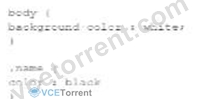
Which portion is the rule?
- A.

- B.

- C.
- D.

Answer: C
Explanation:
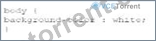
In CSS, a rule is composed of a selector and a declaration block. The rule is the entire part that defines how styles should be applied to elements matching the selector.
* CSS Rule Components:
* Selector: Identifies the HTML elements to be styled (e.g., body, .name, #item).
* Declaration Block: Contains one or more declarations, each consisting of a property and a value, enclosed in curly braces {}.
* Example Analysis:
* Option A:
body {
background-color: white;
}
This is the full rule, consisting of the selector body and the declaration block { background-color: white; }.
* Option B:
background-color: white;
This is just a declaration, not a complete rule.
background-color: white,
This is an incorrect declaration due to the comma, and not a complete rule.
* Option D:
color: black
This is just a declaration, not a complete rule.
* References:
* W3C CSS Syntax and Basic Data Types Module Level 3
* MDN Web Docs - CSS Syntax
NEW QUESTION # 43
What is a characteristic of JavaScript code?
- A. It remains hidden from the user.
- B. It runs inside a web browser
- C. It must be compiled lo work.
- D. It implements across browsers.
Answer: B
Explanation:
JavaScript is a scripting language primarily used for creating and controlling dynamic website content. Here are some characteristics:
* Runs Inside a Web Browser: JavaScript code is executed in the web browser, making it possible to create interactive and dynamic web pages.
* Cross-Browser Compatibility: JavaScript is designed to be compatible across different web browsers.
* Interpreted Language: JavaScript is interpreted, meaning it does not need to be compiled before execution.
* Accessible to Users: JavaScript code is not hidden from the user; it can be viewed in the browser's developer tools.
References:
* MDN Web Docs on JavaScript
* W3C JavaScript Introduction
NEW QUESTION # 44
Given the following CSS: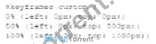
What is being configured?
- A. Processing on a server
- B. Rendering to the canvas
- C. Processing in the browser
Answer: C
Explanation:
The given CSS configures properties that control the processing of animations directly in the browser.
* CSS Animations: CSS animations are processed by the browser's rendering engine. The animations defined by CSS are handled client-side and do not require server-side processing.
* Key Properties:
NEW QUESTION # 45
A file named application, Appchache contains the following content:
Which attribute should a developer set to application. Appchache so the four files will be cached?
- A. The manifest attribute of the <html> element
- B. The href attribute of the <Link> element
- C. The src attribute of the <script> element
- D. The srcset attribute of the <source> element
Answer: A
Explanation:
To specify a cache manifest file for an HTML document, the manifest attribute must be set in the <html> element. This attribute tells the browser to cache the files listed in the manifest for offline use.
* Cache Manifest:
* Purpose: Specifies resources that should be cached by the browser.
* Attribute: manifest is used in the <html> tag to link the cache manifest file.
* Example:
* Given the manifest file application.appcache:
CACHE MANIFEST
CACHE:
default.html
stylesheet.css
functions.js
logo.jpg
* HTML with the manifest attribute:
<html manifest="application.appcache">
</html>
* References:
* MDN Web Docs - Offline Web applications
* W3C HTML5 Specification - manifest attribute
NEW QUESTION # 46
Given the following CSS code:
How many seconds elapse before the font-size property begins to increase when a user hovers a mouse pointer over the delay element?
- A. 0
- B. 1
- C. 2
- D. 3
Answer: C
Explanation:
The CSS transition-delay property specifies how long to wait before starting a property transition. In the given CSS code, the transition-delay is set to 2s.
* CSS Transition Properties:
* transition-property: Specifies the CSS property to which the transition is applied (font-size in this case).
* transition-duration: Specifies how long the transition takes (4s).
* transition-delay: Specifies the delay before the transition starts (2s).
Example:
* Given HTML:
<div id="delay">Hover over me</div>
* Given CSS:
#delay {
font-size: 14px;
transition-property: font-size;
transition-duration: 4s;
transition-delay: 2s;
}
#delay:hover {
font-size: 36px;
}
Explanation: When a user hovers over the element with id="delay", it will wait for 2 seconds before the transition effect on font-size starts.
References:
* MDN Web Docs - transition-delay
* W3C CSS Transitions
NEW QUESTION # 47
What is the used to render images dynamically?
- A. Ogg
- B. Canvas
- C. MPEG-4
- D. H.264
Answer: B
Explanation:
The <canvas> element in HTML5 is used to render images and graphics dynamically through JavaScript. It is a powerful feature for creating graphics, game visuals, data visualizations, and other graphical content directly in the browser.
* Canvas Element: The <canvas> element is an HTML tag that, with the help of JavaScript, can be used to draw and manipulate graphics on the fly.
* Usage Example:
<canvas id="myCanvas" width="200" height="100"></canvas>
<script>
var canvas = document.getElementById("myCanvas");
var ctx = canvas.getContext("2d");
ctx.fillStyle = "#FF0000";
ctx.fillRect(0, 0, 200, 100);
</script>
In this example, a red rectangle is drawn on a canvas element.
References:
* MDN Web Docs on <canvas>
* W3C HTML Canvas 2D Context Specification
NEW QUESTION # 48
......
Updated WGU Web-Development-Applications Dumps – PDF & Online Engine: https://testking.vcetorrent.com/Web-Development-Applications-valid-vce-torrent.html